
Thermal Insulation EIFS Mortar Production Line
Specialty mortar plant for EIFS adhesive mortar, insulation board bonding mortar and lightweight plaster systems.
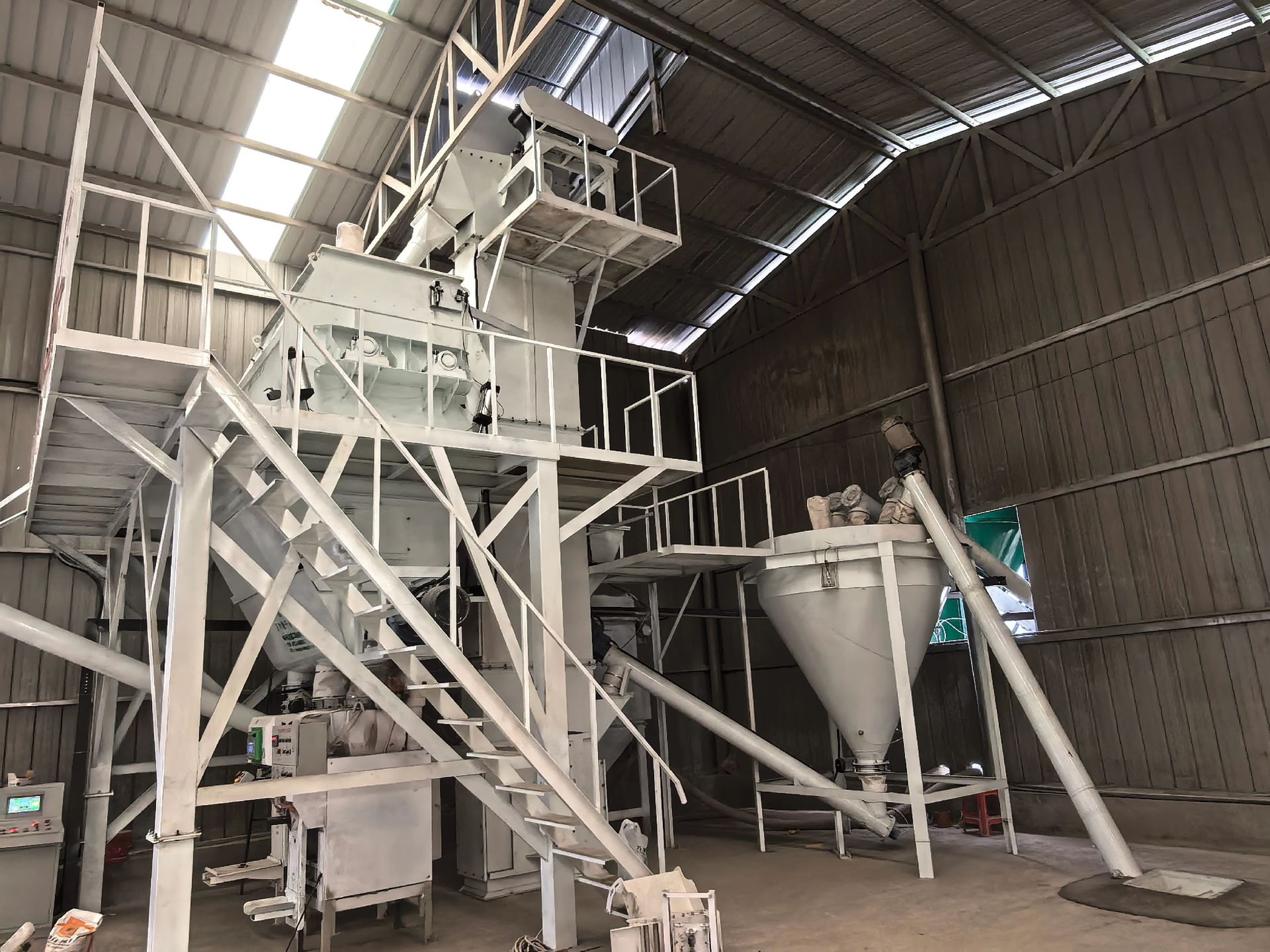
EIFS Mortar Requires Bonding and Gentle Mixing
EIFS and thermal insulation mortars often contain polymer additives and lightweight materials. The line should balance bonding performance, mixing uniformity and protection of fragile aggregates.
Gentle Mixing Option
Mixer design can reduce damage to lightweight aggregates when needed.
Bonding Strength Support
RDP and cellulose ether dosing supports insulation board adhesive performance.
Multi-Formula Production
Can support adhesive mortar, base coat mortar and lightweight plaster formulas.
Key Configuration Points
These points decide whether the solution fits your production target, raw materials and workshop condition.
Lightweight Aggregate
Glass beads or lightweight fillers require careful feeding and mixing design.
Polymer Additives
RDP and cellulose ether dosing affects bond strength and workability.
Dust Control
Fine powder and lightweight materials need better dust collection.
Packing Method
Bagging system should protect product from moisture and segregation.
Working Process
The process can be adjusted according to layout, automation level and optional equipment.
Material Feeding
Cement, fillers, lightweight aggregate and additives enter feeding system.
Weighing
Main materials and additives are weighed by formula.
Gentle Mixing
Powders are mixed uniformly while reducing aggregate damage.
Packing
Finished EIFS mortar is packed for site application.
Product Photos & Selection Details
EIFS mortar needs gentle material handling and stable formula control, so equipment selection should start from product density and additive behavior.
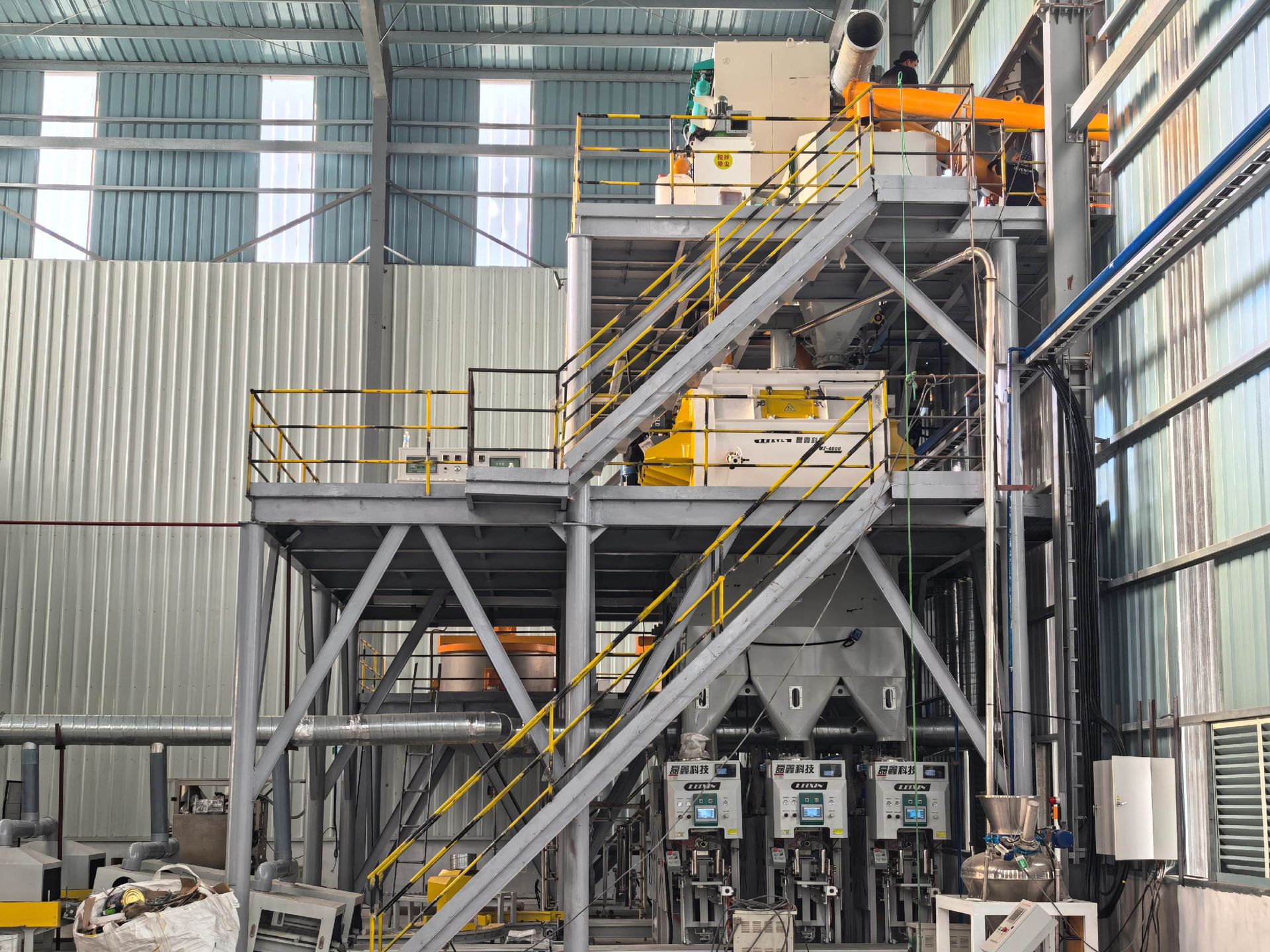
Main Reference
EIFS mortar line main equipment
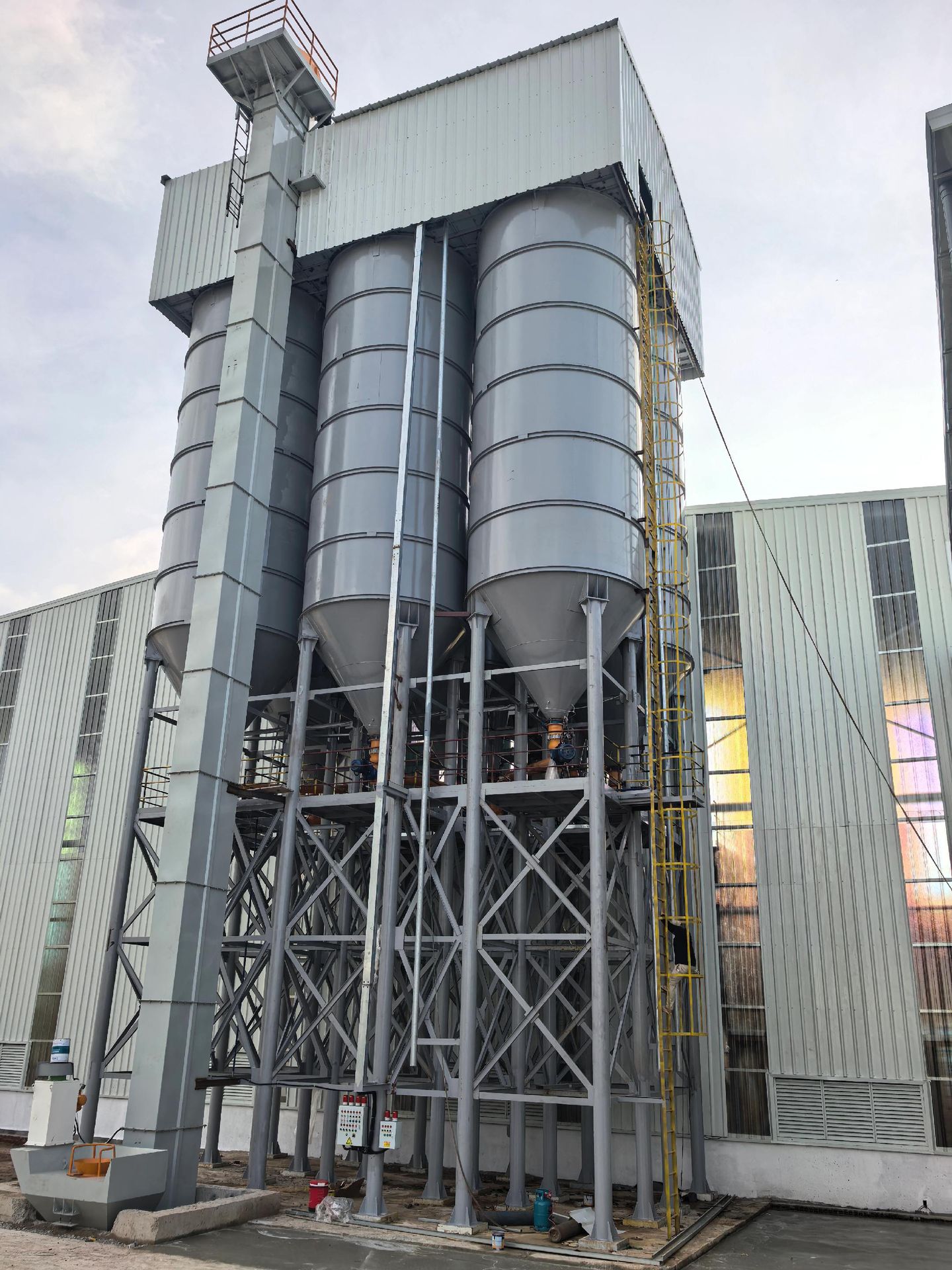
Detail / Site View
EIFS mortar production reference
| Selection Item | What to Confirm | Why It Matters |
|---|---|---|
| Target products | Wall putty, tile adhesive, plaster, waterproof mortar or mixed production. | Product type decides raw material storage, mixer and packing layout. |
| Batch capacity | Expected kg per batch, tons per day and production shifts. | Capacity affects mixer volume, elevator size and packing speed. |
| Workshop size | Length, width, height, power supply and future expansion space. | Layout must fit real installation conditions, not only equipment size. |
| Automation level | Manual feeding, semi-automatic packing, automatic weighing or PLC upgrade. | Budget and labor cost decide the most practical starting configuration. |
These photos and selection points are for preliminary communication. Final layout, model and quotation should be confirmed according to your raw materials, workshop and target output.
Technical Reference
Reference parameters for preliminary model selection and quotation discussion.
| Configuration | Capacity Direction | Key Material | Mixer Direction | Packing | Typical Product |
|---|---|---|---|---|---|
| Starter line | 3-5 t/h | Cement + filler + RDP | 1-2 m³ | 25 kg bags | EIFS adhesive mortar |
| Standard line | 5-10 t/h | Lightweight aggregate option | 2-4 m³ | Valve bag packing | Base coat mortar |
| Automatic line | 10-20 t/h | Micro-additive dosing | 4-6 m³ | Packing + palletizing | Multi-formula EIFS mortar |
| Custom line | By formula | Fragile aggregate support | By material | By market | Project solution |
Reference configuration only. Final parameters should be confirmed by raw material testing, plant layout and contract configuration.
Before We Recommend a Model
Please provide these details so the proposal is not a generic quotation.
- Target product: adhesive mortar, base coat mortar or lightweight plaster.
- Whether lightweight aggregate is used.
- Additive list and required bonding strength.
- Capacity target and packing method.
- Dust control and workshop layout requirement.
FAQ
Common questions before selecting this solution.
Can the mixer protect lightweight aggregate?
Mixer and process can be adjusted to reduce physical damage, but the final design depends on aggregate type and fragility.
Can this line produce tile adhesive too?
Yes, some configurations can support multiple specialty mortar products, but formula changeover and cleaning should be planned.
Do EIFS mortars need RDP?
Most bonding and insulation mortars use polymer additives to improve adhesion and flexibility. Final dosage should be tested.
Can NEO adjust the configuration if my budget is limited?
Yes. NEO can start with a compact semi-automatic layout and leave space for future upgrades such as automatic weighing, better packing, palletizing or PLC control.
Planning an EIFS mortar plant?
Send your insulation mortar formula direction, aggregate type and capacity target. NEO will suggest a suitable configuration.