
Water Reducer / Superplasticizer
Flow-control additive for self-leveling mortar, grout, repair mortar and other high-flow dry mix products where water demand, spreading behavior and strength stability must stay balanced.
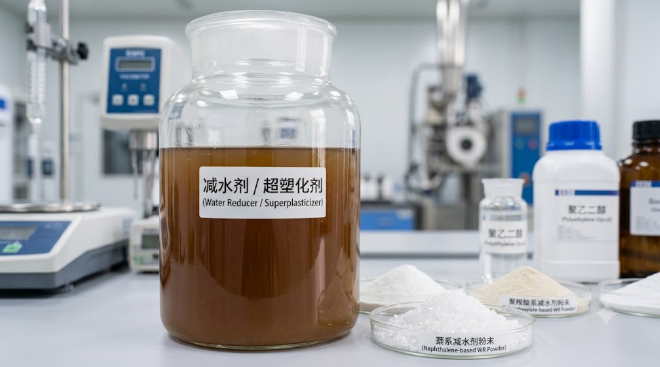
What This Additive Helps Balance
Water reducers and superplasticizers are used when the formula needs better fluidity without simply adding more water. They are often matched with defoamer, retarder, cellulose ether, RDP and the cement system.
Flowability
Supports higher flow at a lower water level, which is important for self-leveling mortar and grout.
Particle Dispersion
Improves dispersion of cementitious particles and helps reduce agglomeration in the mix.
Strength Stability
Can help the formula keep better early and final strength balance when dosage is matched correctly.
Typical Application Directions
The final grade must match the cement system, gypsum, fly ash, sand grading and target flow behavior.
Main Product Uses
- Self-leveling mortar
- Grout
- Repair mortar
- High-flow mortar
- Special tile adhesive formula
Matching Notes
- Often paired with defoamer to control air and surface finish
- May need retarder for longer working time
- Should be tested with the real binder system and sand grading
Product Photos & Selection Details
Water reducer selection should balance flow spread, water demand, strength and compatibility with cement and other additives.
Main Reference
Water reducer and superplasticizer package
| Selection Item | What to Confirm | Why It Matters |
|---|---|---|
| Mortar application | Tile adhesive, putty, self-leveling, repair mortar, waterproof mortar or plaster. | Each product needs a different performance balance. |
| Target performance | Water retention, bonding, flow, open time, anti-sag, defoaming or setting control. | The target function decides grade direction and dosage range. |
| Formula background | Cement, sand, filler, other additives and local temperature. | Compatibility must be checked before confirming a recommendation. |
| Test and documents | Sample plan, TDS, MSDS, dosage trial and packaging requirement. | Lab or site testing reduces risk before bulk purchase. |
These photos and selection points are for preliminary communication. Final model, layout and quotation should be confirmed according to your raw materials, workshop and target output.
Reference Use Range
Use range depends on the additive chemistry and the target mortar system.
| Direction | Reference Addition Range | Primary Goal | Notes |
|---|---|---|---|
| Self-leveling, grout and high-flow mortar | 0.05% – 0.30% | Improve flow with controlled water demand | Needs testing with cement type, gypsum, filler and temperature. |
Actual dosage must be checked by small-batch testing because the result is sensitive to cement type, gypsum, fly ash, sand grading and temperature.
What We Need Before Recommending a Grade
NEO needs these points to suggest a workable additive direction.
- Main product type and target flow level.
- Binder system details such as cement, gypsum or fly ash.
- Whether the formula already uses defoamer, retarder, cellulose ether or RDP.
- Current problem: too thick, bleeding, segregation or unstable strength.
- Need for sample, TDS, SDS or flow testing support.
FAQ
Common questions before buying water reducers for dry mortar formulas.
Is one grade suitable for every self-leveling formula?
Usually no. Binder type, sand grading, temperature and target flow all affect which grade works best.
Can a higher dosage always improve flow?
No. Too much can create bleeding, segregation or unstable setting behavior. The dosage needs lab confirmation.
Can you support sample testing?
Yes. NEO can discuss the target product and arrange TDS, SDS and sample direction before larger purchasing.
Can NEO recommend the dosage directly?
NEO can provide a reference dosage range, but final dosage should be confirmed by formula testing with your cement, filler, sand and other additives.
Need better flow without losing control?
Send your product type, binder system and current issue. NEO will suggest a superplasticizer direction and sample plan.