
Starch Ether & Thickeners
Functional thickeners for tile adhesive, wall putty, plastering mortar and repair mortar where anti-sag performance, anti-slip control and application feel need to stay stable.
What This Additive Helps Control
Starch ether is usually not the main strength additive. It works with HPMC, RDP, cement, graded sand and filler to improve jobsite behavior and make the mortar easier to spread and hold.
Anti-Sag Performance
Helps reduce slumping on vertical application and supports better hold for tile adhesive and wall materials.
Thixotropic Feel
Improves the balance between easy spreading during work and stable shape after application.
Slip Resistance
Supports tile adhesive formulas that need better anti-slip behavior during installation.
Typical Application Directions
Final grade and dosage should be confirmed with your local raw materials and product target.
Main Product Uses
- Tile adhesive
- Wall putty and skim coat
- Plastering mortar
- Repair mortar
- EIFS mortar
How It Is Commonly Matched
- Used together with HPMC for water retention and thickening balance
- Matched with RDP when adhesion and flexibility are also required
- Adjusted together with sand grading and filler ratio
Product Photos & Selection Details
Starch ether selection should focus on anti-sag behavior, open time and compatibility with cellulose ether.
Main Reference
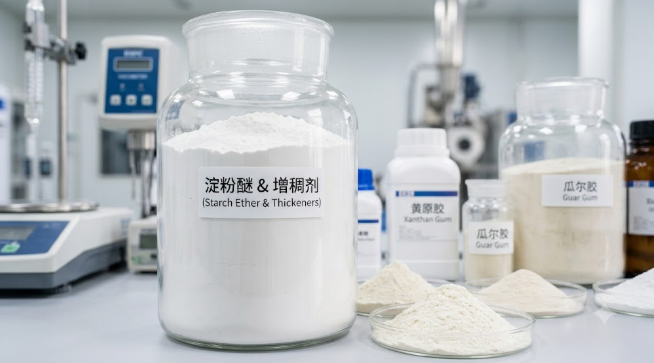
Starch ether and thickener package
| Selection Item | What to Confirm | Why It Matters |
|---|---|---|
| Mortar application | Tile adhesive, putty, self-leveling, repair mortar, waterproof mortar or plaster. | Each product needs a different performance balance. |
| Target performance | Water retention, bonding, flow, open time, anti-sag, defoaming or setting control. | The target function decides grade direction and dosage range. |
| Formula background | Cement, sand, filler, other additives and local temperature. | Compatibility must be checked before confirming a recommendation. |
| Test and documents | Sample plan, TDS, MSDS, dosage trial and packaging requirement. | Lab or site testing reduces risk before bulk purchase. |
These photos and selection points are for preliminary communication. Final model, layout and quotation should be confirmed according to your raw materials, workshop and target output.
Reference Use Range
These values are planning references only. Lab testing is still needed before bulk purchasing.
| Direction | Reference Addition Range | Primary Goal | Notes |
|---|---|---|---|
| Tile adhesive and wall products | 0.01% – 0.05% | Anti-sag, anti-slip and workability | Check together with HPMC grade, sand grading and application feel. |
The actual dosage depends on cement type, calcium filler, HPMC, RDP, sand grading and the required construction behavior.
What We Need Before Recommending a Grade
Send these details so NEO can suggest a practical direction instead of a generic additive name.
- Main product type: tile adhesive, wall putty, plastering mortar or repair mortar.
- Your current formula structure and key raw materials.
- What problem you want to improve: anti-sag, slip resistance or application feel.
- Whether HPMC and RDP are already fixed in the formula.
- Need for TDS, SDS and sample support.
FAQ
Common questions before buying starch ether for dry mortar production.
Does starch ether replace HPMC?
No. It is usually used together with HPMC. HPMC mainly supports water retention, while starch ether often helps with anti-sag, slip resistance and application feel.
Can one grade fit every mortar product?
Usually no. Tile adhesive, putty and repair mortar may need different balance points, so the grade should be checked against the target product and formula.
Can you provide documents and samples?
Yes. NEO can arrange TDS, SDS and sample discussion after confirming the target product and purchasing direction.
Can NEO recommend the dosage directly?
NEO can provide a reference dosage range, but final dosage should be confirmed by formula testing with your cement, filler, sand and other additives.
Need better anti-sag or application feel?
Send your formula direction, current issue and target product. NEO will suggest a starch ether matching path and sample plan.