
HPMC Cellulose Ether for Dry Mortar
Cellulose ether additive for tile adhesive, wall putty, plastering mortar, self-leveling and repair mortar where water retention, workability, suspension stability and open time need to stay controlled together.
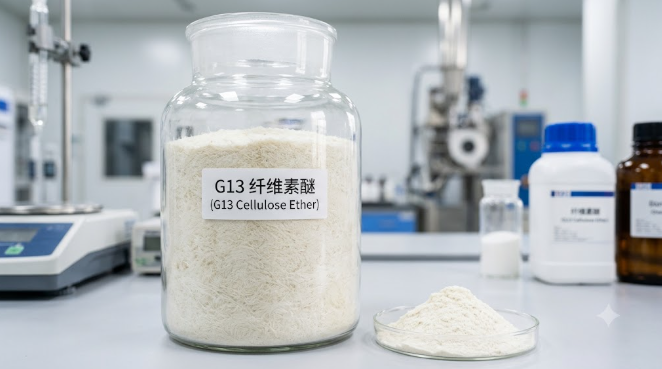
What Cellulose Ether Helps Control
In dry mortar formulas, cellulose ether is mainly used for water retention, thickening, suspension stability and open-time control. Different grades do not behave exactly the same, so the right choice depends on your target product and the site condition.
Water Retention
Helps cement and binder systems keep enough water for hydration and improves construction stability.
Application Feel
Improves spreading, scraping and troweling feel in putty, plaster and tile adhesive formulas.
Suspension & Open Time
Supports aggregate suspension and helps extend workable time when the formula needs longer handling.
Special Grade Direction from NEO
NEO can discuss modified cellulose ether grades when the customer has a more specific performance target than standard HPMC.
G13 Water-Resistant Grade
- Designed around water resistance, crack resistance, strengthening, thixotropy and water retention.
- Useful for exterior wall putty, tile adhesive and waterproof mortar in humid conditions.
- Helps formulas that need stronger stability on damp substrates.
G11 Cohesion-Enhancing Grade
- Focuses on cohesion, anti-sag behavior, strengthening and water retention.
- Suitable for self-leveling mortar, repair mortar and grout direction.
- Typical discussion range in mortar formulas: 0.1% – 0.4% depending on system design.
G11 and G13 are both cellulose ether system discussions. Final use still depends on testing with the actual cement, filler, sand and target performance.
Typical Product Matching
Choose the grade by the problem you want to solve, not only by additive name.
| Target Product | Typical Function Focus | Discussion Direction | Notes |
|---|---|---|---|
| Tile adhesive | Water retention, anti-slip, open time | Standard HPMC or G13 discussion | Check with starch ether, RDP and sand grading. |
| Wall putty and exterior putty | Application feel, water retention, crack control | Standard HPMC or G13 discussion | Useful where moisture resistance matters. |
| Self-leveling and grout | Suspension stability, cohesion and controlled flow | G11 discussion | Check together with superplasticizer and defoamer. |
| Repair mortar | Anti-sag, cohesion and workability | G11 or G11 + G13 discussion | Can be checked where both fast build and water stability are needed. |
What We Need Before Recommending a Grade
Send these details so NEO can narrow the cellulose ether choice faster.
- Main product type: tile adhesive, putty, plastering mortar, self-leveling or repair mortar.
- Your current formula issue: poor water retention, weak cohesion, softening in wet conditions or unstable suspension.
- Whether RDP, starch ether, defoamer or superplasticizer are already fixed.
- Target jobsite environment, especially humid or exterior exposure.
- Need for TDS, SDS and sample support.
Product Photos & Selection Details
Selection should be based on mortar type, viscosity direction, water retention target and site temperature.
Main Reference
HPMC cellulose ether package
| Selection Item | What to Confirm | Why It Matters |
|---|---|---|
| Mortar application | Tile adhesive, putty, self-leveling, repair mortar, waterproof mortar or plaster. | Each product needs a different performance balance. |
| Target performance | Water retention, bonding, flow, open time, anti-sag, defoaming or setting control. | The target function decides grade direction and dosage range. |
| Formula background | Cement, sand, filler, other additives and local temperature. | Compatibility must be checked before confirming a recommendation. |
| Test and documents | Sample plan, TDS, MSDS, dosage trial and packaging requirement. | Lab or site testing reduces risk before bulk purchase. |
These photos and selection points are for preliminary communication. Final model, layout and quotation should be confirmed according to your raw materials, workshop and target output.
FAQ
Common questions before buying cellulose ether for dry mortar production.
What is the difference between G11 and G13?
G13 is mainly discussed for better water resistance and humid-condition stability, while G11 is more focused on cohesion, anti-sag behavior and suspension performance.
Can G11 and G13 be used together?
They can be discussed together in some formula directions where water resistance and cohesion both matter, but the final combination should be confirmed by testing.
Can NEO help connect cellulose ether choice with formula support?
Yes. NEO can discuss the target mortar product, current issue and supporting additive direction before you confirm purchasing.
Can NEO recommend the dosage directly?
NEO can provide a reference dosage range, but final dosage should be confirmed by formula testing with your cement, filler, sand and other additives.
Need better water retention or moisture stability?
Send your product type, current formula issue and jobsite condition. NEO will suggest a cellulose ether direction and sample plan.